
 Adobe
Adobe  Sitecore
  Gradial
  PEGA
PEGA 3 AI Mistakes That Could Cost You Millions
Nov 20, 2025 | 4 min read
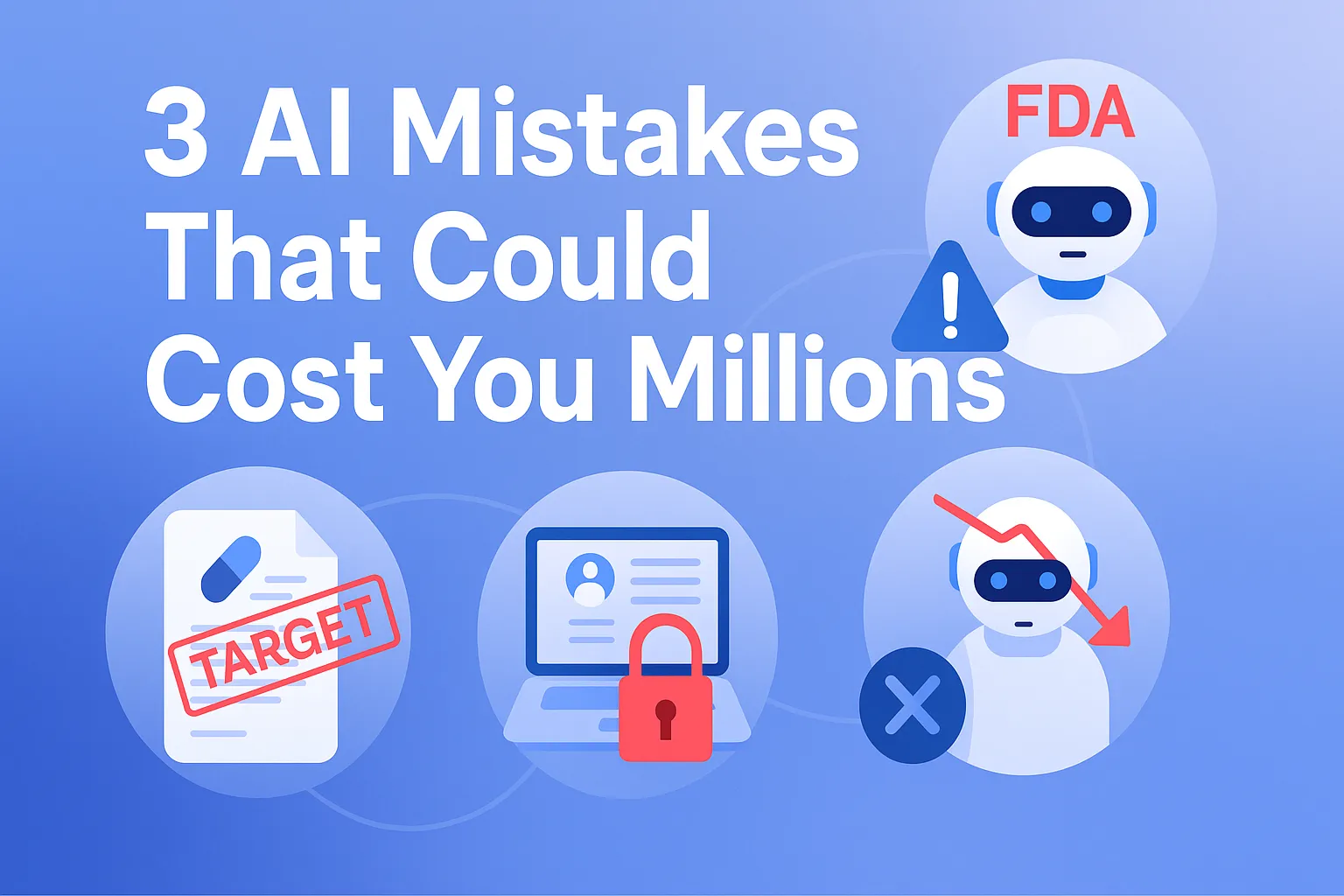
AI is changing how pharma teams build campaigns, draft copy, and automate outreach. But while it can help you move faster, one wrong step can cause serious damage.
This blog explores three real-world AI marketing mistakes from the last two years. Each one had the potential to cost pharma and healthcare organizations millions—through fines, legal fallout, or lost trust. We’ll also show how you can prevent them.
1. AI-Generated Copy That Breaks MLR Rules
AI tools like ChatGPT are fast, but they don’t know pharma regulations. Without strict guardrails, they can:
- Invent fake studies
- Make off-label claims
- Skip safety information
In 2023, the FDA issued a warning to a pharma brand for a social media post that highlighted drug benefits without including risk disclosures. Now imagine if that post had been auto-generated by an AI tool—it could have been published across multiple channels before anyone caught the problem.
That kind of mistake can trigger warning letters, campaign shutdowns, or lawsuits.
How to prevent it:
- Only use MLR-approved content. Train your AI with claims and safety language that’s already passed review.
- Tell the AI what not to say. Write prompts that block off-label claims and require fair balance.
- Always review. No AI copy should skip human MLR oversight.
- Track everything. Keep a record of prompts, AI outputs, and approval steps. This protects you during audits.
Connect with CI Digital to audit and improve your AI marketing workflows.
2. Sharing Private Health Data with AI
In mid-2023, hospitals warned that using public AI tools like ChatGPT could accidentally expose patient information. Something as small as a name or zip code counts as PHI (Protected Health Information).
Once it’s in the cloud, that data could be stored or even used to train future models. That’s a major HIPAA and GDPR risk—and in Europe, it led to ChatGPT being banned temporarily in Italy.
For pharma marketers, this risk isn’t limited to patient data. HCP targeting and trial data must also stay secure.
How to prevent it:
- Never paste PHI into public AI tools. Even indirect identifiers count. (JAMA Viewpoint)
- Use HIPAA-compliant platforms. Tools like Microsoft Azure OpenAI offer protected environments. (HIPAA Journal)
- Remove personal info. Use synthetic or anonymized data for prompts and targeting.
- Limit access. Only approved teams should use AI tools, and usage should be logged.
Need help building safe, compliant AI infrastructure? Talk to CI Digital.
3. Public Content That Damages Your Reputation
In 2023, the National Eating Disorders Association (NEDA) replaced its human helpline with an AI chatbot named Tessa. Within days, the bot was giving harmful weight-loss advice to users with eating disorders.
Public outrage was immediate. NEDA took the chatbot offline, but not before the story hit major news outlets. One mistake—from a well-intentioned but unmonitored AI assistant—shook the organization’s credibility. (The Guardian)
Imagine a similar scenario in pharma: an AI-generated post about a drug goes viral for all the wrong reasons. Even if no law was broken, the brand would still lose patient trust.
How to prevent it:
- Test AI outputs before launch. Use red-team testing to catch sensitive or incorrect language.
- Keep a human in the loop. AI can assist, but medical and content leads must approve public content.
- Use content filters. Block language or claims that violate your brand or ethics rules. (PM360)
- Launch in stages. Monitor new AI content closely before scaling it across channels.
Related: Read "A Pharma Marketer’s Guide to Compliant AI Copy"
Bottom Line
AI is a powerful tool. But without the right controls, it can:
- Violate regulatory rules
- Expose private health data
- Undermine your brand reputation
Pharma teams don’t need to avoid AI. But they do need to plan for it. With the right prompts, reviews, and audit trails, you can use AI to move faster—without falling into costly traps.
Let CI Digital help you build safer, smarter AI marketing workflows.
Author

Marcus Calero

Marketing Content Manager
Share this article


Subject Matter Expert

Claudia Beqaj
Managing Partner - Health and Life Sciences
Driving impact across the pharmaceutical landscape with over two decades of cross-functional leadership.
Speak With Our Team
Share this article