 Adobe
 Sitecore
 Gradial
 PEGA
AI development services vs. AI-as-a-Service: how to choose the right partner
Oct 13, 2026 | 5 min read
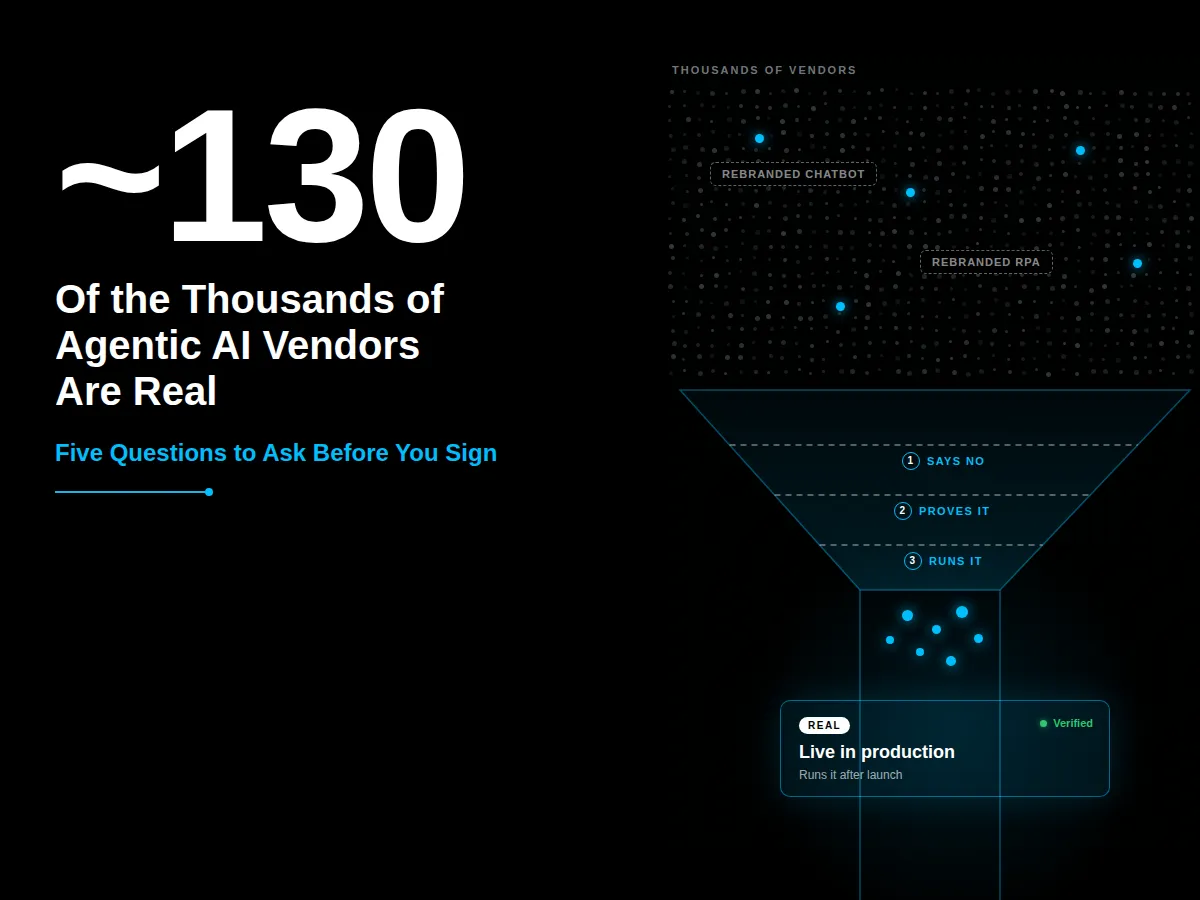
TL;DR: AI development services build a custom system and hand it over. AI-as-a-Service builds it, runs it, and keeps improving it. Choose the model by asking who owns the system after launch, then test every partner's claims. Gartner estimates that only about 130 of the thousands of agentic AI vendors are real.
Picture the last day of an AI project. The vendor gives the final demo, hands over the code, and closes the ticket. Your team now owns a system it didn't build, on a stack it didn't choose, with a model that updates every few months.
That day decides whether the project keeps working. Many buyers spend weeks comparing vendors and little time asking what happens the morning after handoff.
This guide compares two ways to buy AI help: AI development services and AI-as-a-Service. It builds on the readiness phase in our enterprise AI implementation roadmap.
What are AI development services?
AI development services are project-based work to design, build, and deploy a custom AI system. An outside team scopes the work, builds the system, tests it, and hands it over. Support after launch is often a separate agreement.
This model fits when your own team will own the system, the scope is clear, and the use case stays stable. It fits less well when the workflow keeps changing.
What is AI-as-a-Service, and how is it different?
AI-as-a-Service is an ongoing arrangement where the provider builds your AI workflows, runs them, and improves them over time. You buy results in a workflow instead of a one-time deliverable.
The difference shows up after launch. A development project ends at handoff. AI-as-a-Service starts there, because the provider keeps the system current as models, data, and rules change. We cover the operating model in AIaaS vs traditional managed services. We make the case against building it all yourself in the death of DIY AI.
Who builds it? In-house team: Your engineers. AI development services: An outside development team. AI-as-a-Service: The provider.
Who runs it after launch? In-house team: Your team. AI development services: Your team, or a separate support contract. AI-as-a-Service: The provider.
Who handles model and data changes? In-house team: Your team. AI development services: You, unless the contract says otherwise. AI-as-a-Service: The provider.
Fits when In-house team: You already have AI engineers and time. AI development services: A defined build that your team is ready to own. AI-as-a-Service: Workflows that keep changing, and a team that wants results.
Main risk In-house team: A slow start and hiring gaps. AI development services: A gap on day one after handoff. AI-as-a-Service: Reliance on a provider that hides its logs.
How do you choose between AI development services and AI-as-a-Service?
Start with one question: who owns the system after launch? If your team will own it and has the skills to run it, development services can work. If you want one partner accountable for results after launch, AI-as-a-Service fits better.
Forrester's 2026 survey of 1,500 AI decision-makers adds a clue. It found that 47% of high AI adopters work with outside partners to prepare their data and systems, compared with 26% of low adopters. (Forrester, April 2026) Outside help is common among the companies that are further along.
Not sure your team needs outside help yet? Our post on how to tell whether your team needs AI help gives a simple test.
What should you ask a partner before you sign?
Five questions separate a strong partner from a weak one. Ask them in this order.
What will you tell me not to build?
A good partner filters use cases. Gartner recommends pursuing agentic AI only where it delivers clear value or ROI. (Gartner, June 2025) A partner who says yes to every idea isn't filtering. Ask for one example of a project they talked a client out of.
Can you show it working in production?
Ask for a live workflow, not a demo. Gartner estimates that only about 130 of the thousands of agentic AI vendors are real. Many others rebrand chatbots and RPA as agents. Ask what the system decides on its own and what it hands to a person.
Who runs it after launch, and who trains my team?
Ask who watches the system and how. You want an action log and a rollback path. Our guides to AI workflow automation in regulated industries and AI risk management for regulated enterprises show what good looks like. Also ask how the partner trains your people. AI training for employees should cover the review work they will do beside the AI.
How will we know it is working?
Agree on a baseline before the build starts. Then agree on the measures and the review date. Our post on how to measure AI ROI without guessing walks through the method.
What do I own if we part ways?
Get the answer in writing. Your workflows, prompts, data, documentation, and logs should come with you. A partner who hesitates here is selling lock-in.
Where should a team start?
Run a short readiness check before you shortlist anyone. List your candidate workflows, name an owner for each, and note who would run each one after launch. The answers show which model fits.
CI delivers AI-as-a-Service and starts with an AI readiness assessment. Talk to CI about which model fits your team.
Frequently asked questions
What are AI development services?
AI development services are project-based work to design, build, and deploy a custom AI system. An outside team scopes the work, builds the system, and hands it over, and support after launch is often a separate agreement.
What is AI-as-a-Service?
AI-as-a-Service is an ongoing arrangement where a provider builds your AI workflows, runs them, and improves them over time. You buy results in a workflow instead of a one-time deliverable.
How do you choose an AI development partner?
Start by deciding who owns the system after launch. Then ask what the partner will tell you not to build. Ask to see a workflow running in production. Ask who monitors it and who trains your team. Agree on a baseline, and on what you own if the work ends.
What should an AI development contract cover?
A contract should name who runs the system after launch and how the partner handles model and data changes. It should also say how you will measure results and what you keep if the contract ends, including workflows, prompts, data, documentation, and logs.
Author

Craig Taylor

Share this article


Subject Matter Expert

Craig Taylor
Practice Lead, CI Digital
Speak With Our Team
Share this article