 Adobe
Adobe  Sitecore
  Gradial
  PEGA
PEGA From Alerts to Action: IT Operations, Reimagined
Mar 02, 2026 | 3 min
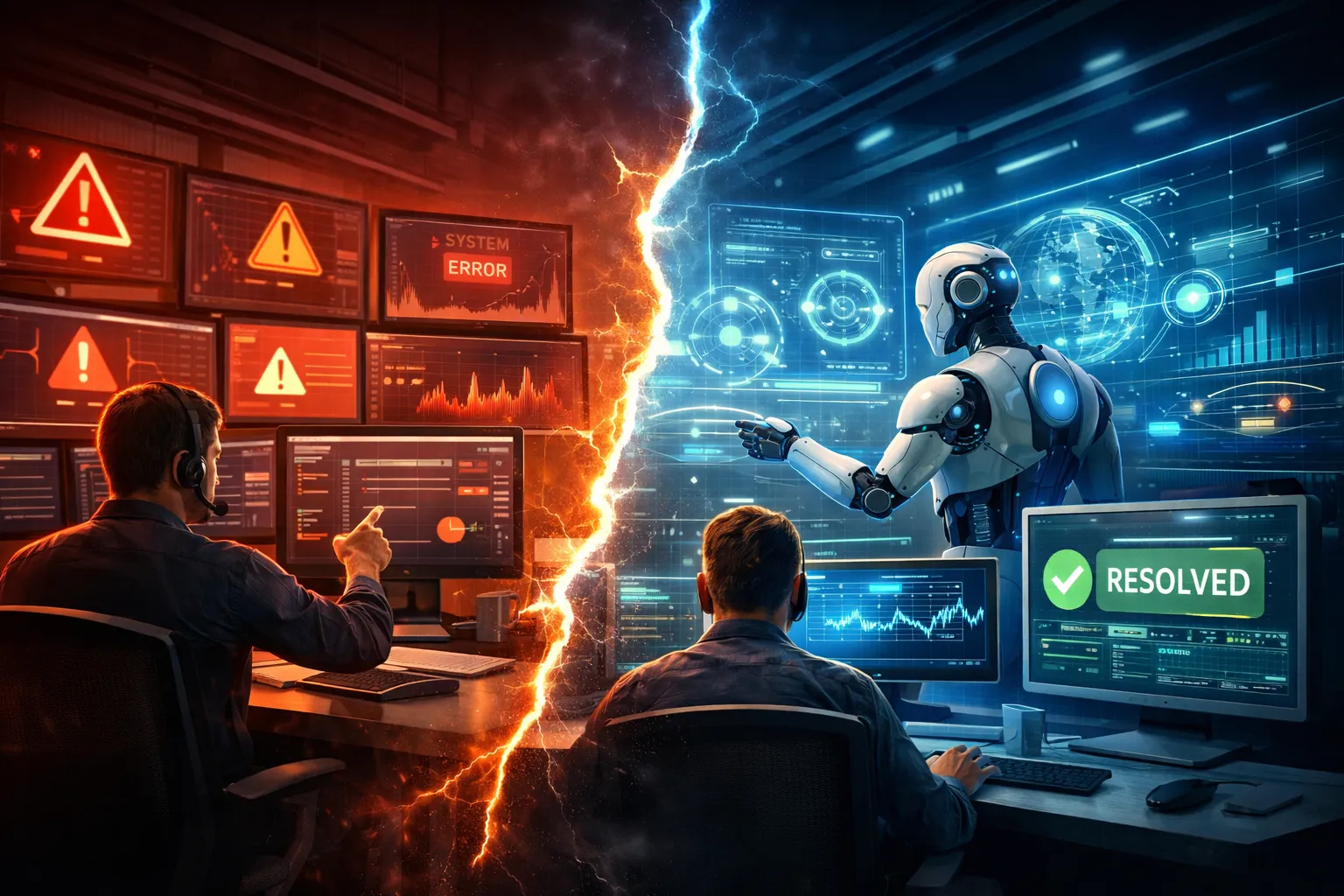
Modern IT operations teams are under relentless pressure. Systems are more distributed. Architectures are more complex. Releases move faster. And expectations for uptime and performance are higher than ever.
Traditional monitoring tools can tell you what is broken. But they can’t fix it.
That’s where Agentic Managed Operations (MOPS) changes the game.
Instead of stopping at alerts and dashboards, Agentic MOPS moves IT operations from passive monitoring to autonomous resolution—with human oversight guiding the strategy and governance.
The Problem: Monitoring Is Not the Same as Managing
Most IT environments today rely on:
- Monitoring dashboards
- Alerting systems
- Incident management workflows
- Runbooks and escalation trees
These tools are necessary—but reactive.
When something breaks:
- An alert fires.
- A human investigates.
- Logs are reviewed.
- A ticket is created.
- A fix is deployed.
- A retrospective is scheduled.
This process is manual, time-consuming, and inconsistent across time zones.
And in globally distributed environments—like those operating across Ireland, the USA, and India—handoffs introduce even more latency and risk.
What if your operations model didn’t stop at detection?
What if it diagnosed, decided, and executed—automatically?
What Is Agentic MOPS in IT Operations?
Agentic MOPS applies AI-driven, goal-oriented agents to operational workflows.
These agents don’t just surface anomalies. They:
- Correlate logs, metrics, and traces
- Detect patterns across environments
- Identify probable root causes
- Trigger remediations automatically
- Escalate intelligently when human judgment is required
This is not simple automation. It’s agentic execution—AI systems that operate within guardrails to achieve defined operational outcomes.
Instead of writing static scripts, organizations define:
- Policies
- SLAs
- Escalation logic
- Compliance boundaries
Agents then operate within those constraints to keep systems healthy and performant.
From Monitoring to Resolution: The Shift
Here’s how the evolution typically looks:
1️⃣ Monitoring-Centric Model
- Alert thresholds
- Human triage
- Manual remediation
- After-the-fact reporting
2️⃣ Automation-Enhanced Model
- Scripted responses
- Predefined runbooks
- Limited dynamic intelligence
3️⃣ Agentic MOPS Model
- Continuous log and metric analysis
- AI-driven pattern recognition
- Context-aware remediation
- Cross-system orchestration
- Audit-ready traceability
- Human-in-the-loop governance
In this model, operations teams shift from firefighting to strategic oversight.
Where Agentic MOPS Creates Immediate Impact
Incident Management
AI agents can:
- Detect anomalies earlier
- Cluster related alerts
- Suggest root cause hypotheses
- Execute safe, reversible remediation steps
Only high-risk or ambiguous scenarios get escalated.
CI/CD & Deployment Failures
Agentic workflows can:
- Analyze pipeline failures
- Identify flaky tests
- Re-run safe stages
- Roll back deployments when needed
- Open enriched tickets with context
This aligns closely with modern AI-enabled development practices—like agent-mode workflows and spec-driven development—already transforming engineering teams .
Quality & Testing Operations
In mature IT organizations, quality is not separate from operations.
AI-enabled automation engineers are already leveraging agent-mode workflows for failure clustering, risk detection, and faster triage .
Agentic MOPS extends that intelligence into runtime environments—connecting:
- Test signals
- Production telemetry
- Change history
- Release metadata
The result? Faster detection of release-related issues and fewer production escapes.
The Human Role: Oversight, Not Obsolescence
Agentic does not mean autonomous chaos.
It requires structure.
High-performing operational environments rely on:
- Clear backlog readiness and requirement clarity
- Strong Agile execution and impediment removal
- Audit-ready artifacts and SDLC discipline
- Cross-timezone coordination
Agentic MOPS enhances these frameworks—it doesn’t replace them.
Humans:
- Define guardrails
- Approve risk boundaries
- Review trend analytics
- Improve policy logic
- Govern compliance
AI handles the repetitive operational load.
The combination creates resilience.
Key Benefits of Agentic MOPS for IT Operations
🔹 Faster MTTR
Agents begin remediation instantly—no waiting for human triage.
🔹 Fewer False Positives
AI clusters alerts and reduces noise.
🔹 Proactive Risk Detection
Pattern recognition surfaces weak signals before outages occur.
🔹 Continuous Compliance
Actions are logged, traceable, and policy-driven.
🔹 Global Operational Continuity
Follow-the-sun operations become seamless when agents operate 24/7.
The Business Impact
When IT operations evolve from monitoring to resolution:
- Engineering velocity increases
- Customer-impacting downtime decreases
- Operational costs stabilize
- Teams focus on modernization instead of maintenance
- Audit readiness improves
The result isn’t just better uptime—it’s a more predictable delivery engine.
If you're exploring how AI agents could transform your IT operations—from reactive monitoring to intelligent resolution—we’d welcome a conversation. Let’s discuss your current operating model and identify where Agentic MOPS can drive measurable impact. Reach out to schedule time to connect.
Final Thought: The Future Is Operational Autonomy with Governance
The future of IT operations isn’t:
- More dashboards
- More alerts
- More tickets
It’s fewer interruptions, smarter systems, and AI agents operating within clearly defined human guardrails.
Monitoring told us what was broken.
Agentic MOPS fixes it.
Author

Tom Boller Jr.

Sales Director - Digital
Share this article


Speak With Our Team
Share this article