 Adobe
Adobe  Sitecore
  Gradial
  PEGA
PEGA From Bottlenecks to Breakthroughs: The Enterprise Case for Scalable Staffing
Jan 05, 2026 | 3 min
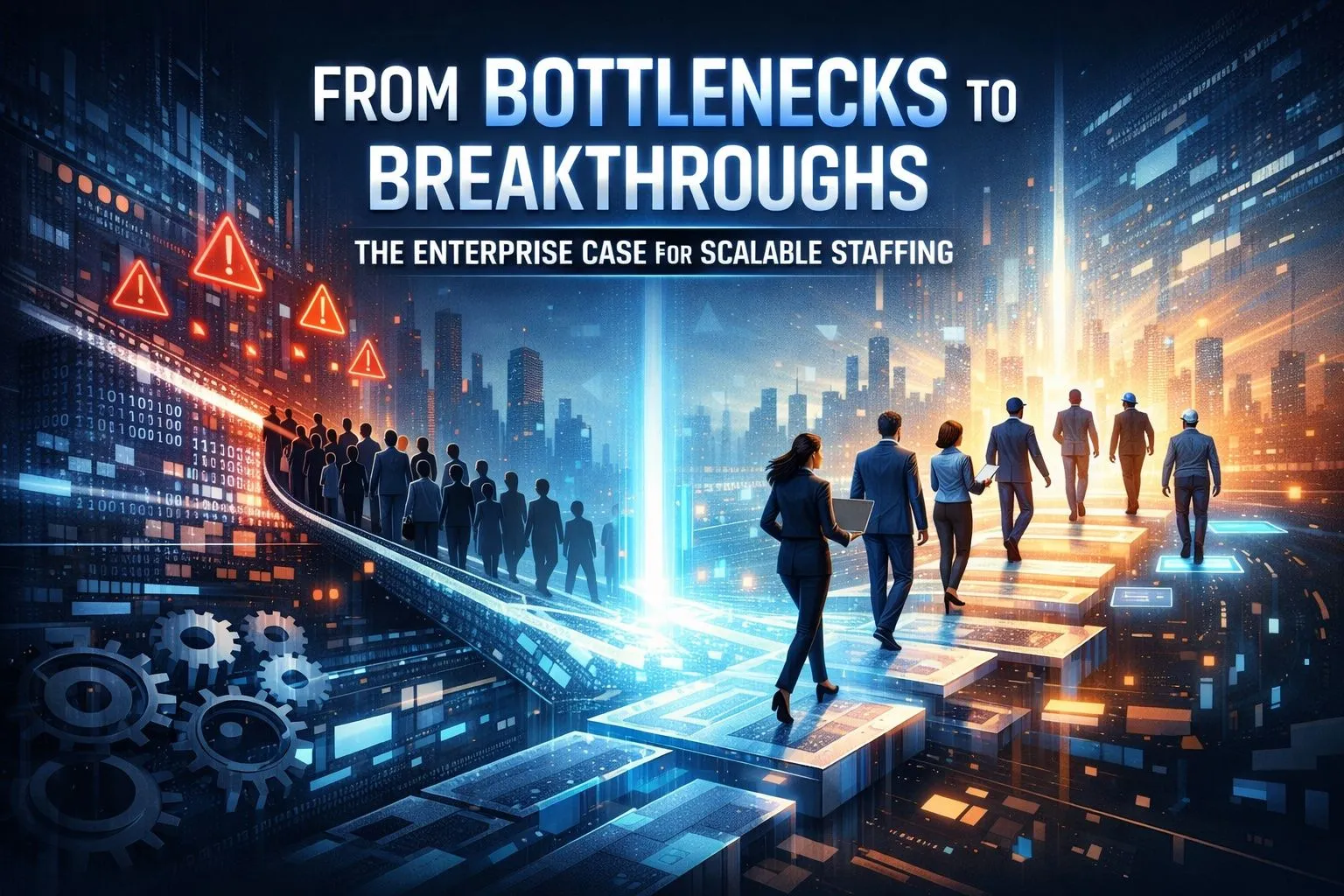
Digital transformation is no longer a one-time initiative—it’s a continuous cycle of innovation. From cloud migrations and ERP upgrades to AI implementations and customer experience platforms, enterprises are managing more digital projects than ever before. Yet one of the biggest obstacles to success isn’t technology—it’s talent.
Traditional hiring models struggle to keep pace with the speed, complexity, and variability of modern digital initiatives. That’s why scalable staffing solutions have become a critical capability for enterprises looking to deliver digital projects on time, on budget, and at enterprise-grade quality.
The Challenge: Fixed Teams in a Variable World
Digital projects are inherently dynamic. Requirements evolve, timelines shift, and skill needs fluctuate throughout the project lifecycle. However, many enterprises still rely on fixed, full-time teams that are difficult to scale up or down.
This creates several common challenges:
- Skill gaps when specialized expertise is needed temporarily
- Resource bottlenecks that delay critical milestones
- Overstaffing or underutilization once peak demand passes
- Burnout among internal teams stretched too thin
Scalable staffing addresses these challenges by allowing enterprises to align talent capacity directly with project demand.
The Value of Scalable Staffing for Digital Projects
Scalable staffing solutions give enterprises access to on-demand talent without long-term overhead. This model enables organizations to respond faster, stay flexible, and maintain momentum across multiple initiatives.
Key benefits include:
1. Access to Specialized Expertise
Digital projects often require niche skills—cloud architects, data engineers, cybersecurity specialists, product managers—that may not be needed full time. Scalable staffing provides immediate access to experienced professionals exactly when they’re needed.
2. Faster Time to Market
By quickly ramping teams up or down, enterprises can avoid delays caused by lengthy hiring cycles and keep projects moving forward.
3. Cost Efficiency and Risk Reduction
Instead of carrying permanent headcount for temporary needs, enterprises can control costs while reducing the risk associated with over-hiring or project slowdowns.
4. Reduced Disruption to Core Teams
Scalable staffing supplements internal teams, allowing employees to stay focused on core business priorities rather than being pulled into short-term initiatives.
Supporting Long-Term Digital Agility
Beyond individual projects, scalable staffing helps enterprises build long-term digital agility. Organizations that can rapidly assemble the right teams gain a competitive advantage—adapting faster to market changes, new technologies, and evolving customer expectations.
In an environment where transformation never truly ends, flexibility in talent strategy is just as important as flexibility in technology.
Author

Tom Boller Jr.

Sales Director - Digital
Share this article


Speak With Our Team
Share this article