 Adobe
 Sitecore
 Gradial
 PEGA
How Fleet Intelligence can Strengthen ESG Reporting
Oct 12, 2026 | 3 min
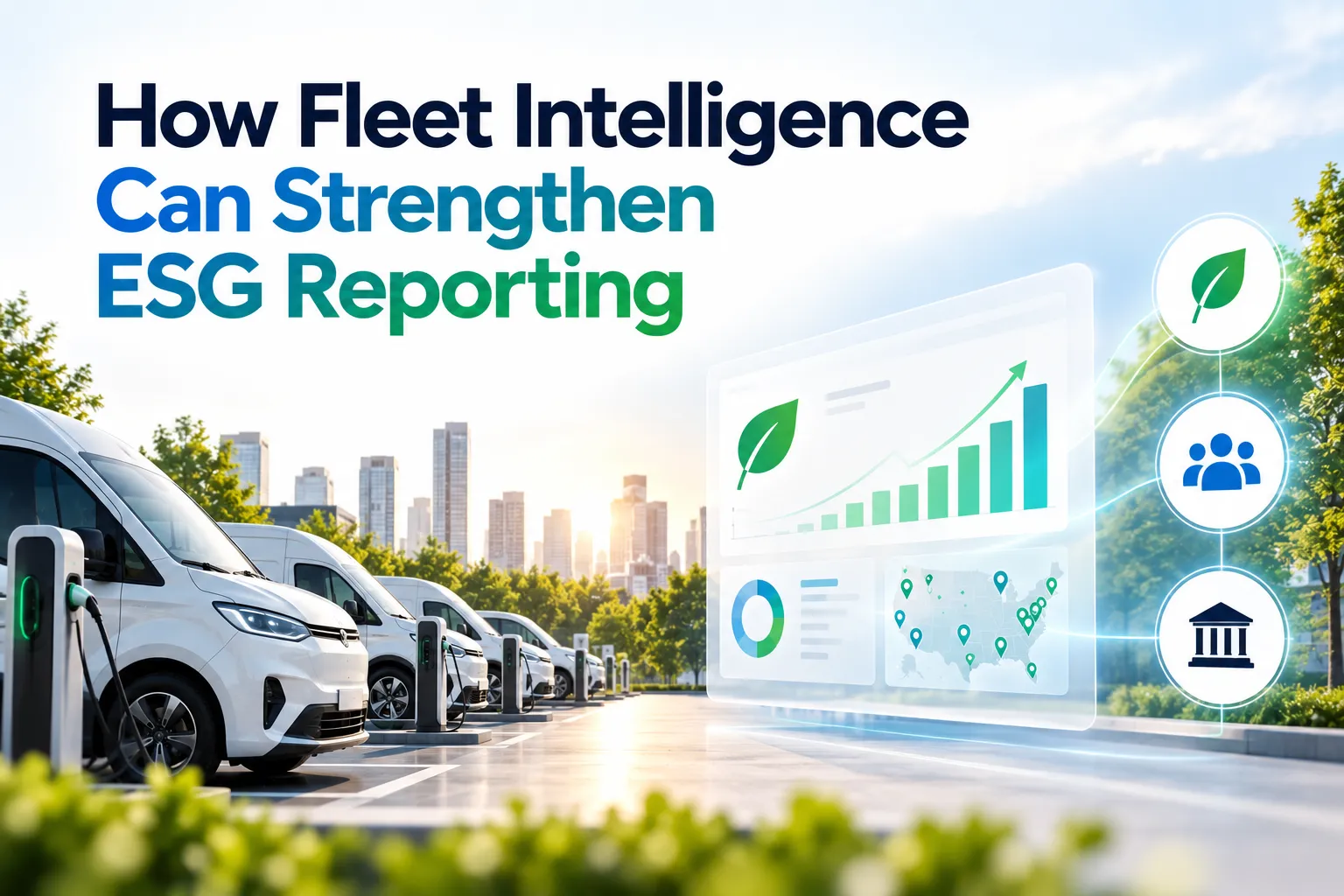
Sustainability has become an important part of enterprise strategy, but for many organizations, turning environmental commitments into measurable results remains a challenge.
Companies are investing in electric vehicles, establishing emissions reduction targets, and working toward more sustainable operations. Yet behind those initiatives, teams are often managing fragmented data, manual reporting processes, and limited visibility into whether their investments are producing the intended results.
For organizations operating large field fleets, these challenges can become particularly complex.
The opportunity isn't simply to collect more sustainability data. It's to use that data to make better decisions, reduce operational costs, and demonstrate measurable progress.
That's where AI-powered Fleet Intelligence can make a meaningful difference.
The Gap Between ESG Commitments and Operational Reality
Many enterprises have established ambitious environmental, social, and governance (ESG) objectives, including commitments to reduce fleet-related emissions.
But establishing a target is only the beginning.
Fleet managers must determine which vehicles to replace, which employees are ready for EVs, where charging infrastructure is sufficient, and how to balance sustainability objectives with operational requirements.
Meanwhile, sustainability teams need reliable information to measure progress and support ESG disclosures.
Too often, these responsibilities are managed across different systems, spreadsheets, and departments.
The result is a disconnect between sustainability strategy and day-to-day fleet operations.
Organizations may know where they want to go, but lack the intelligence needed to determine the most effective path forward.
Moving Beyond Manual ESG Reporting
Traditional ESG reporting can require significant manual effort.
Teams gather mileage information, vehicle inventories, fuel consumption, emissions estimates, and other operational data from multiple sources. That information must then be validated, consolidated, and translated into reports for leadership and external stakeholders.
For enterprises managing hundreds or thousands of vehicles, this process can consume considerable time and resources.
AI and automation create an opportunity to streamline that work.
Rather than repeatedly assembling information manually, organizations can establish more consistent processes for collecting, analyzing, and preparing fleet data.
This can help reduce administrative effort, improve reporting consistency, and give sustainability leaders more time to focus on strategic initiatives.
But reporting efficiency is only part of the opportunity.
The greater value comes when the same data used for ESG reporting also helps improve operational decisions.
How Fleet Intelligence Connects Sustainability and Fleet Operations
Ciberspring's Fleet Intelligence solution was developed to help enterprises make more informed decisions about fleet electrification.
The platform analyzes individual employees and territories using factors such as mileage, charging availability, territory characteristics, and geographic access.
It then generates EV readiness scores and recommendations to help organizations determine where electrification makes the most sense.
Instead of applying the same EV policy across an entire workforce, companies can prioritize employees and territories based on actual operating conditions.
That creates a more practical connection between sustainability objectives and fleet execution.
For example, an organization may have a goal of converting 500 vehicles to EVs over the next year.
Fleet Intelligence can help identify which employees are strongest candidates, where charging limitations may create challenges, and which transitions should potentially be delayed.
This approach can help organizations avoid unnecessary vehicle reassignments, prioritize stronger opportunities for fuel savings, and establish a more defensible deployment strategy.
It also creates a foundation for more meaningful sustainability analysis by connecting fleet decisions with the operational factors that influence emissions.
Turning Fleet Data Into Measurable Business Value
The business case for Fleet Intelligence extends beyond environmental reporting.
More informed EV deployment decisions can potentially reduce vehicle placement mistakes, accelerate fuel and maintenance savings, and minimize time spent manually evaluating fleet readiness.
For sustainability leaders, the opportunity is to connect emissions objectives with specific operational actions.
For finance executives, it's about understanding the financial implications of fleet investments.
For operations teams, it's about ensuring that sustainability initiatives don't create unnecessary disruption for employees.
And for IT leaders, it's an opportunity to use existing enterprise data, automation, and AI to support a real business process.
Ciberspring's Fleet Intelligence roadmap also identifies fleet carbon and ESG reporting as a potential enhancement, alongside executive ROI dashboards and automated reassessment when territories change.
These capabilities could help organizations move toward a more connected view of fleet performance, financial impact, and sustainability progress.
The objective is to make ESG reporting a natural extension of better fleet management—not another disconnected administrative process.
Looking to Connect Your Sustainability Goals With Real Business Outcomes?
Ciberspring helps enterprises move beyond AI experimentation by developing practical solutions that improve operations, reduce manual effort, and support measurable business objectives.
If your organization is evaluating fleet electrification, ESG reporting automation, or opportunities to apply AI to sustainability initiatives, connect with Ciberspring to schedule a conversation.
From Annual Reporting to Continuous Intelligence
One of the limitations of traditional ESG reporting is that it often provides a retrospective view of performance.
Organizations spend time collecting information about what has already happened, rather than using that information to influence what happens next.
Fleet Intelligence creates an opportunity to shift that approach.
Consider a field organization where employees regularly change territories, charging infrastructure expands, and driving requirements evolve.
A vehicle assignment that made sense six months ago may no longer be the most effective option.
By incorporating updated operational information into fleet assessments, organizations can make more informed decisions as conditions change.
As Fleet Intelligence capabilities evolve, integrations with fleet systems, telematics platforms, and emissions data sources could support more continuous monitoring and reporting.
That would allow sustainability and operations teams to work from a more consistent set of information, helping them identify opportunities, measure progress, and adjust their strategies over time.
Rather than treating ESG reporting as an annual exercise, organizations can begin using fleet intelligence to support ongoing operational improvement.
Making ESG Data More Valuable to Executive Leadership
For executive teams, sustainability reporting is increasingly connected to broader business considerations, including investment planning, operational efficiency, risk management, and long-term performance.
The challenge is translating large amounts of operational data into information that supports executive decisions.
A report showing how many EVs have been deployed is useful.
A report that also helps leadership understand which deployments are practical, where potential savings exist, which territories present challenges, and how future investments should be prioritized is significantly more valuable.
This is where AI-powered analysis can help bridge the gap between operational details and executive strategy.
Instead of presenting sustainability information in isolation, organizations can connect it to business performance and execution.
That creates a stronger foundation for conversations between sustainability, finance, operations, and technology leadership.
From AI Strategy to Practical Execution
Many organizations recognize the potential of AI but struggle to translate that potential into working solutions.
The challenge is rarely a shortage of ideas. It's identifying the right business problems, connecting the necessary data, implementing the technology, and making sure the solution produces value.
Ciberspring approaches these challenges through a combination of AI as a Service, technical delivery, automation, and ongoing support.
Fleet Intelligence illustrates how that approach can work.
Start with an operational challenge. Use existing enterprise data. Automate repetitive analysis. Apply AI to generate more actionable insights. Then help business teams turn those insights into better decisions.
The same principles can be applied to sustainability reporting, operational analytics, financial analysis, and other processes where organizations spend significant time gathering and interpreting information.
The goal isn't simply to introduce AI into the business. It's to make the business operate more effectively because of it.
Building a Smarter Approach to Sustainability
ESG reporting will continue to play an important role in how enterprises measure and communicate environmental progress.
But the organizations that create the most value from their sustainability investments will be those that connect reporting with better operational execution.
For fleet-intensive businesses, that means moving beyond manual spreadsheets and broad EV mandates toward more informed, data-driven decisions.
Ciberspring's Fleet Intelligence solution provides a foundation for that transition, helping organizations evaluate EV readiness, reduce manual analysis, and develop more practical electrification strategies.
And as capabilities expand, the opportunity to connect fleet intelligence with emissions analysis, reporting automation, and financial performance becomes even greater.
Better sustainability outcomes start with better operational intelligence.
If your organization is looking to modernize fleet operations, strengthen ESG reporting, or explore how AI can turn sustainability goals into measurable business results, contact Ciberspring to start the conversation.
Author

Tom Boller Jr.

Sales Director - Digital
Share this article


Speak With Our Team
Share this article