 Adobe
Adobe  Sitecore
  Gradial
  PEGA
PEGA Smarter Fleets, Less Manual Work: Putting AI Into Action
Sep 08, 2026 | 3 min
AI is showing up in nearly every part of the enterprise, but for many organizations, there is still a gap between talking about AI and using it to solve an actual business problem.
Fleet management is a good example.
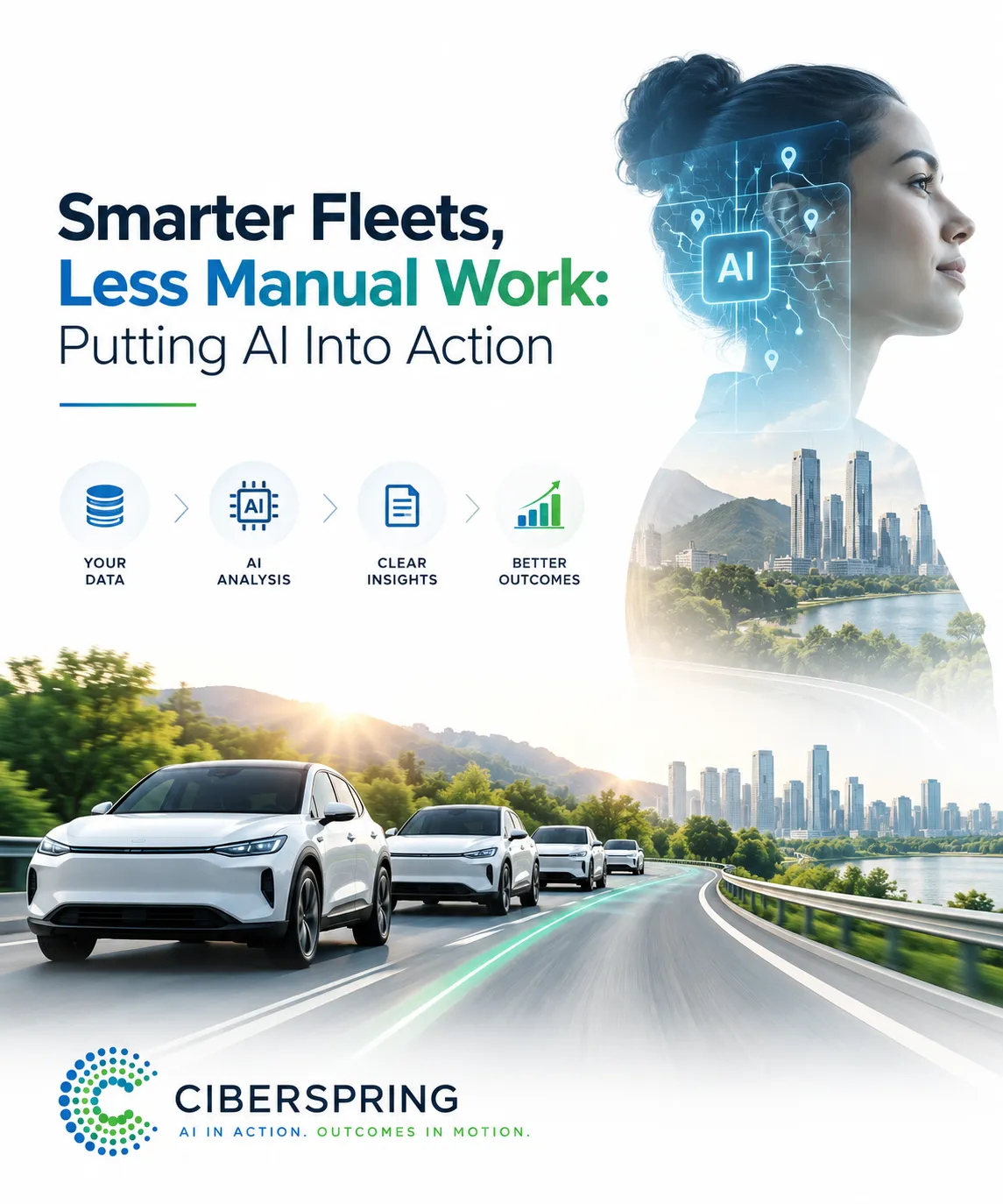
Large organizations already have plenty of fleet data: employee rosters, territories, mileage, vehicle information, fuel costs, charging infrastructure, and sustainability targets. The problem isn't necessarily a lack of data. It's the time and effort required to bring that information together, analyze it, and turn it into decisions.
That's where an AI-powered fleet management platform can make a practical difference.
Instead of giving fleet teams another dashboard to monitor, AI can help answer questions such as:
Which employees are ready for EVs? Which territories present the greatest risk? Where should we prioritize investment? And what is the business case behind those decisions?
From Fleet Data to Fleet Intelligence
Traditional fleet analysis can involve a lot of manual work.
An analyst may need to review employee and territory files, evaluate weekly mileage, research charging availability, understand geographic differences, compare vehicle economics, and then translate everything into recommendations for leadership.
Multiply that process across hundreds or thousands of employees, and it becomes difficult to do consistently.
Ciberspring's Fleet Intelligence platform takes a different approach.
Organizations can start by uploading existing roster and territory data rather than implementing an entirely new data ecosystem. The platform can then process that information, score individual employees, generate recommendations, and produce reports for stakeholders.
The objective is simple: automate the repetitive analysis so people can spend more time making and executing decisions.
So, What Does the Platform Actually Do?
At a high level, Fleet Intelligence turns existing fleet information into actionable recommendations.
1. It brings the relevant data together
The platform starts with existing roster and territory information and can enrich that data with external sources.
The solution architecture incorporates information related to charging infrastructure, electricity and fuel economics, urban and rural classifications, driving geography, vehicle efficiency, and emissions.
Instead of an analyst manually jumping between different sources, the platform creates a more unified foundation for analysis.
2. It scores EV readiness at the individual level
One of the biggest challenges with fleet electrification is that a company-wide policy doesn't reflect individual driving conditions.
A rural field employee driving hundreds of miles each week may have completely different requirements from an urban employee traveling short distances with easy access to charging. The Fleet Intelligence materials specifically identify these differences as a problem with blanket EV policies.
Fleet Intelligence addresses this by generating an individual viability score. The current methodology considers charging density, weekly mileage, territory priority, and geographic access, with configurable weighting as business priorities evolve.
That gives fleet teams a much more practical way to prioritize deployment.
3. It explains the recommendation
A score alone isn't enough.
If an employee receives a low EV-readiness score, fleet managers need to understand why. Is mileage too high? Is charging infrastructure limited? Does the territory create range concerns?
Fleet Intelligence combines scoring with an AI reasoning layer that can evaluate territory context and risk factors and produce specific recommendations for individual employees.
That makes the output easier to understand, communicate, and act on.
Less Manual Analysis. Better Execution.
This is where the business value of AI becomes clearer.
Imagine a company planning its next 500 EV deployments.
The traditional question might be:
“How do we get 500 more EVs into the fleet?”
Fleet Intelligence helps turn that into:
“Which 500 vehicles should we transition first?”
That's an important distinction.
The goal isn't simply to automate an existing spreadsheet. It's to help the organization make better decisions faster and then give business, operations, sustainability, and IT teams a common set of information for executing those decisions.
The platform can take real roster information, score employees from 0–100, generate individual analysis, and produce an exportable fleet report for stakeholder review.
Thinking about how AI could improve your fleet operations?
Ciberspring helps organizations take use cases like this from an initial idea to a working business solution. If you're evaluating fleet electrification, sustainability initiatives, or other opportunities to apply AI to fleet operations, reach out to Ciberspring to start the conversation.
The Value Goes Beyond EV Recommendations
Fleet electrification may be the starting point, but the broader opportunity is better fleet decision-making.
For operations leaders, that can mean reducing the time analysts spend manually evaluating territories and employees.
For sustainability leaders, it can mean creating a clearer path between corporate emissions targets and actual vehicle deployment decisions.
For finance and business leaders, it can mean better visibility into potential savings, costs, and payback.
And for IT and engineering teams, it demonstrates how AI can be integrated into an existing business process rather than deployed as a disconnected experiment.
The Fleet Intelligence business case, for example, considers value across avoided poor vehicle placements, accelerated fuel savings, analyst labor savings, ESG reporting automation, and compliance-related benefits.
That's an important shift in how companies should think about enterprise AI.
The measure of success isn't whether AI is being used. It's whether the business process becomes better because of it.
A Platform That Can Get Smarter Over Time
Fleet conditions aren't static.
Employees change territories. Charging networks expand. Mileage patterns change. New vehicles enter the market. Fuel and electricity economics shift.
An intelligent fleet platform can evolve alongside those changes.
The Fleet Intelligence roadmap includes potential capabilities such as automatic rescoring when territories change, fleet carbon and ESG reporting, EV-versus-low-emission cost assessments, executive ROI dashboards, telematics integration, and HR and fleet system synchronization.
That opens the door to something much larger than a one-time EV assessment.
Over time, organizations can move toward a continuously updated decision-support environment where fleet strategy responds to real-world conditions instead of relying on periodic manual analysis.
Moving From AI Ideas to Real Outcomes
Many companies don't need another AI brainstorming session. They need help identifying where AI can create measurable value and then actually building it.
That's the approach behind Ciberspring's AI as a Service capabilities.
Fleet Intelligence is an example of how that can work: identify a specific operational problem, determine what data is available, automate the repetitive work, add AI-powered analysis where it creates value, and turn the result into something teams can actually use.
The same model can extend into other areas of operations where employees are spending significant time collecting information, analyzing it manually, and making repeatable decisions.
AI becomes valuable when it moves from “What could we build?” to “What business problem can we solve?”
For fleet organizations, that means fewer manual processes, clearer recommendations, better execution, and a more measurable path toward electrification.
If your organization is thinking through fleet electrification—or looking for practical opportunities to put AI to work—connect with Ciberspring to explore what's possible.
Author

Tom Boller Jr.

Sales Director - Digital
Share this article


Speak With Our Team
Share this article